
Still Doing It All Manually? Here's What It's Actually Costing You
Be honest — how many hours this week went into things a system could've already handled for you?
Replying to the same emails on repeat. Manually chasing down follow ups. Rebuilding the same report from scratch every week. Copy pasting data between tools that should just talk to each other.
None of that moves your business forward. It just quietly drains your time, your focus, and your energy.
The hidden cost of manual work
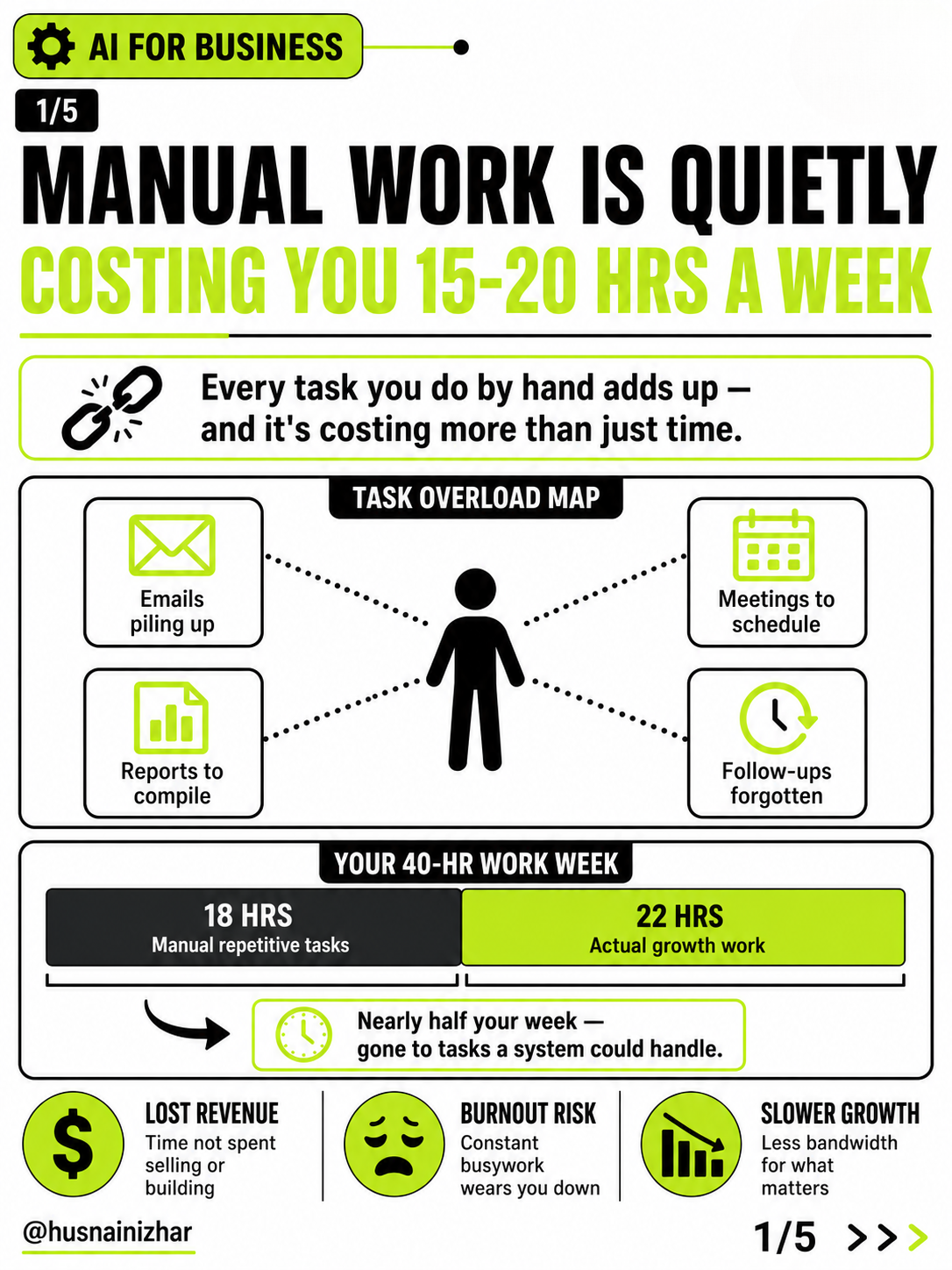
Most business owners don't realize how much of their week disappears into repetitive tasks until they actually track it. On average, it's 15–20 hours a week — nearly half a standard work week — spent on things like:
- Sorting and replying to routine emails
- Scheduling and rescheduling meetings back and forth
- Compiling reports from scattered data
- Following up on leads that go cold before anyone gets to them
That's not just lost time. It's lost revenue, slower growth, and a steady drip of burnout — because every hour spent on busywork is an hour not spent on the work that actually grows your business.
Why automation exists
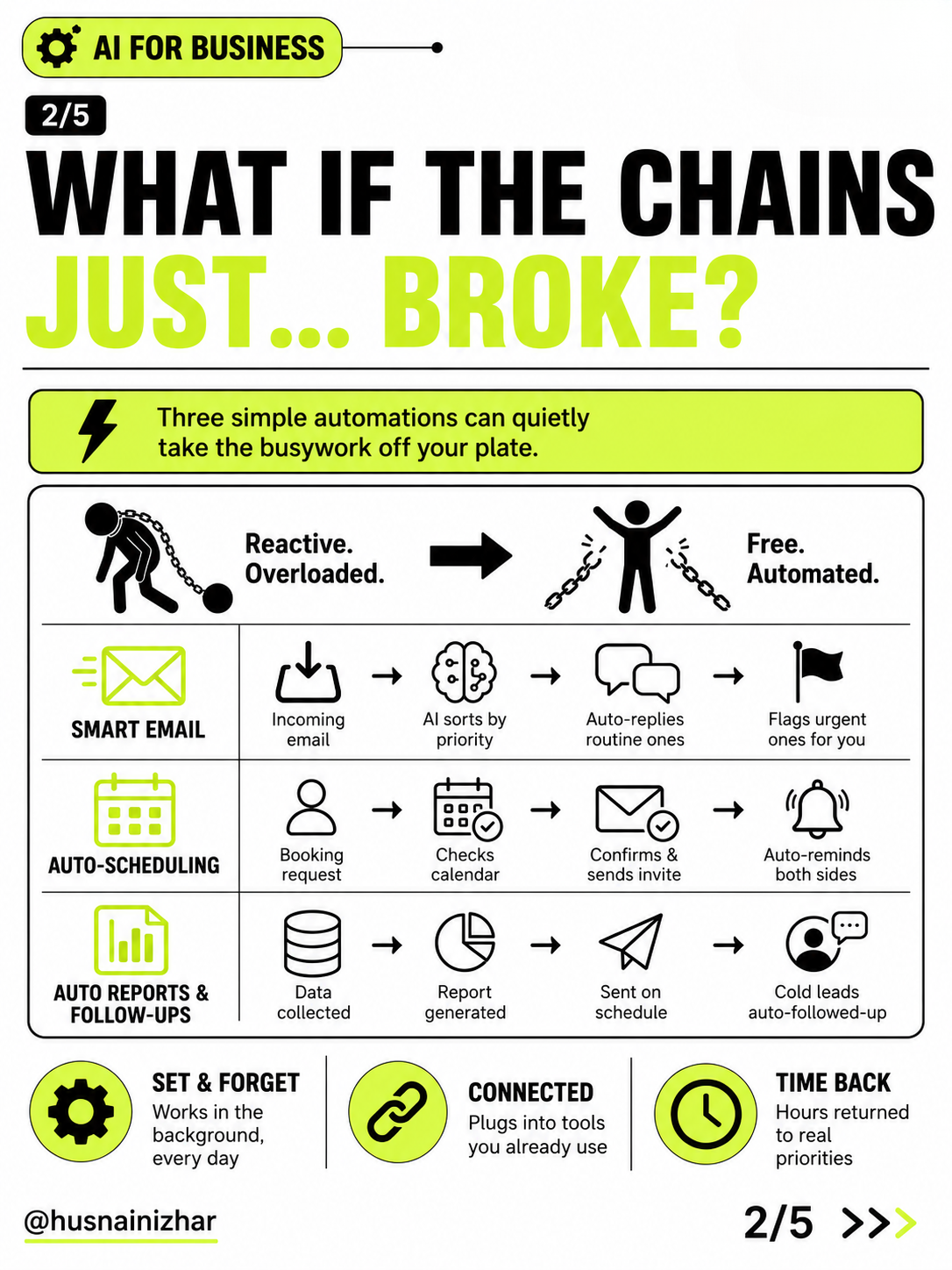
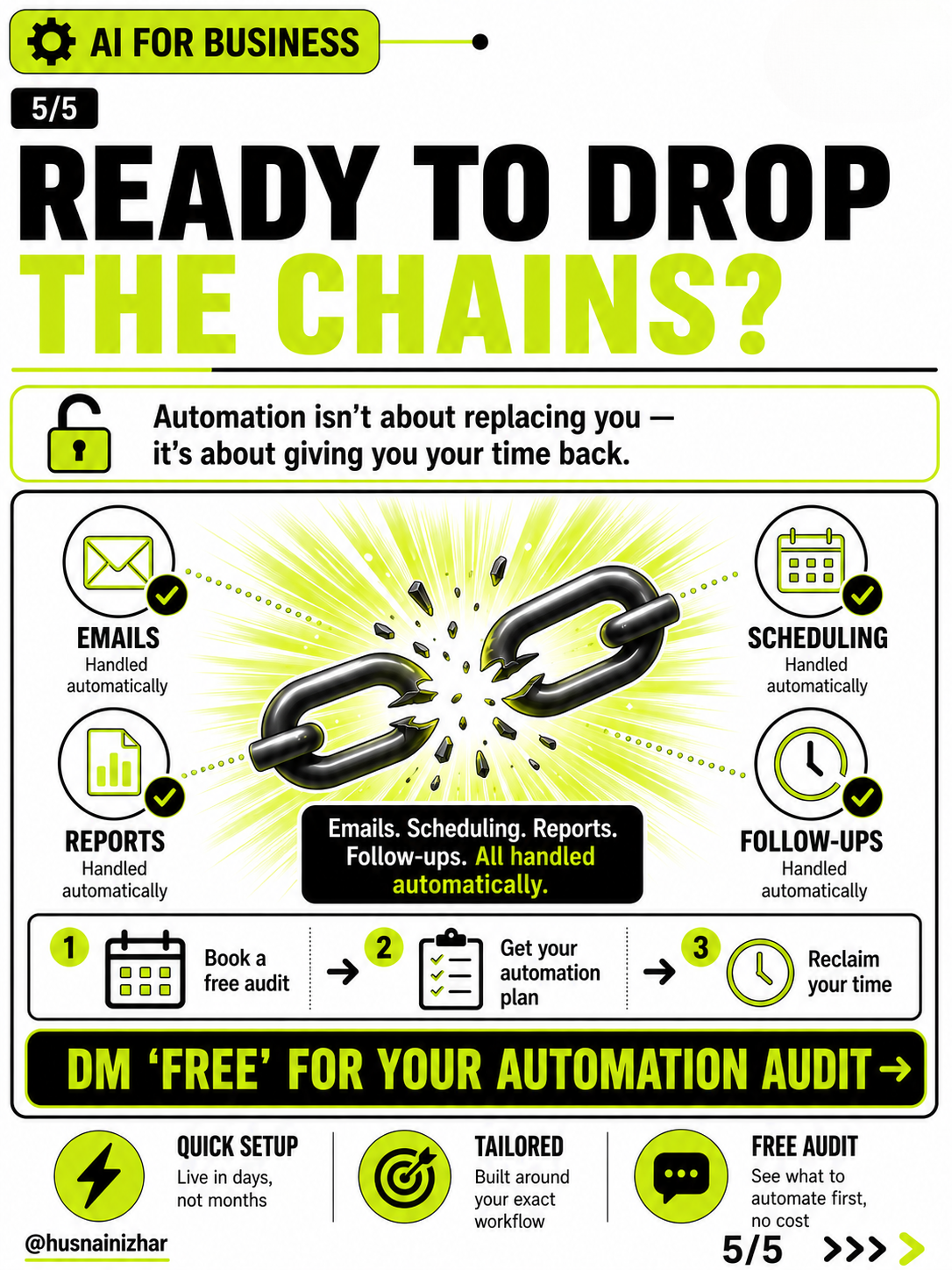
This is exactly why automation exists — not to replace you or your team, but to take the repetitive work off your plate so you can spend your time on what actually drives revenue.
The idea is simple: identify the tasks that follow a predictable pattern, and let a system handle them consistently, without you having to think about it. In practice, that usually breaks down into three areas:
1. Smart email handling
Incoming emails get automatically sorted by priority. Routine questions get answered instantly. Anything that actually needs your judgment gets flagged and sent straight to you — nothing falls through the cracks.
2. Auto-scheduling
Booking requests check your calendar, confirm the meeting, send the invite, and remind both sides — no back-and-forth threads eating up your inbox.
3. Auto reports & follow-ups
Data gets pulled together and reports get generated on a schedule, automatically. Leads that haven't responded get a follow-up nudge without you having to remember to send it.
What changes when you automate
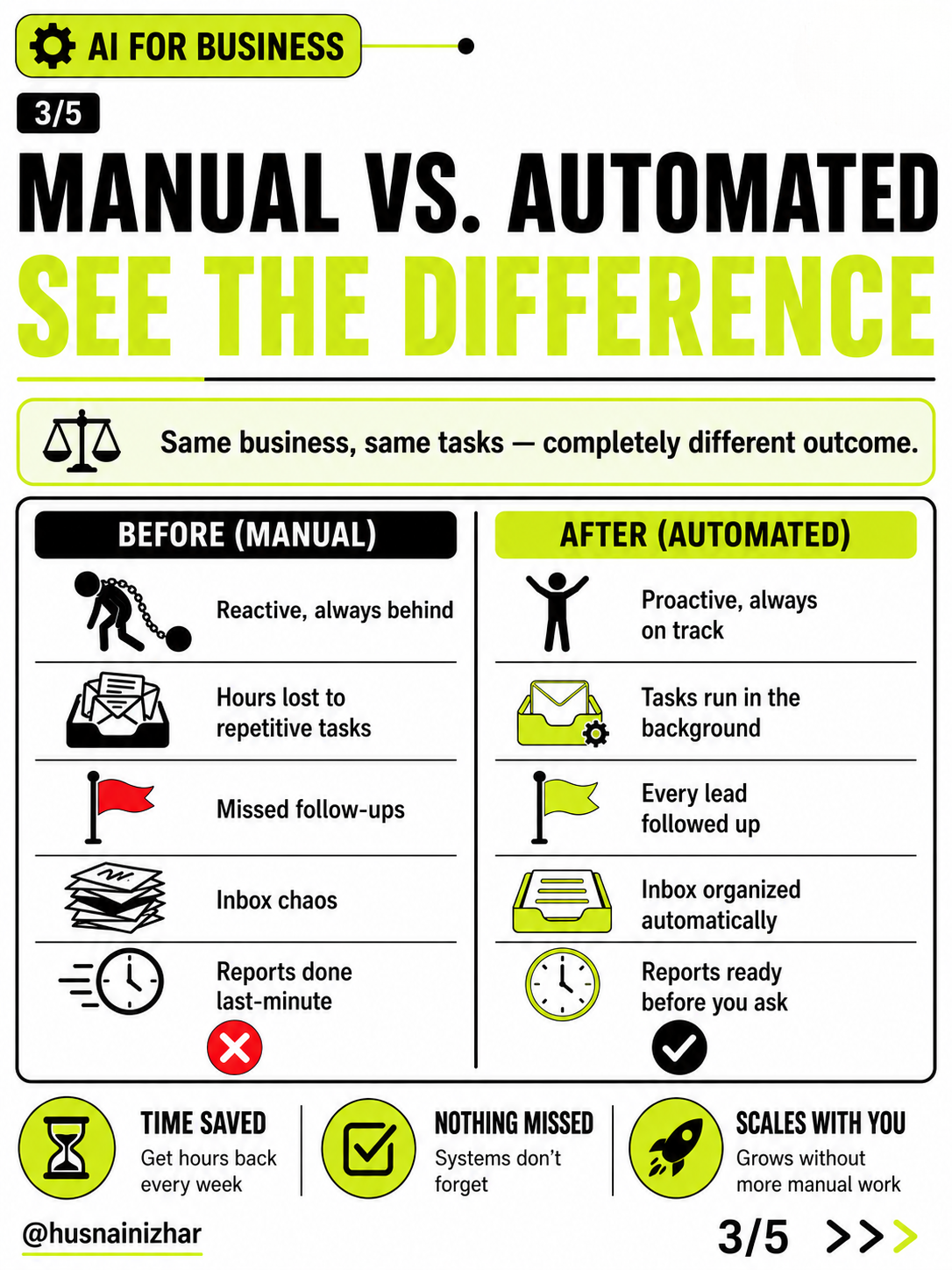
| Manual | Automated |
|---|---|
| Reactive, always behind | Proactive, always on track |
| Hours lost to repetitive tasks | Tasks run in the background |
| Missed follow-ups | Every lead followed up |
| Inbox chaos | Inbox organized automatically |
| Reports done last-minute | Reports ready before you ask |
The results speak for themselves
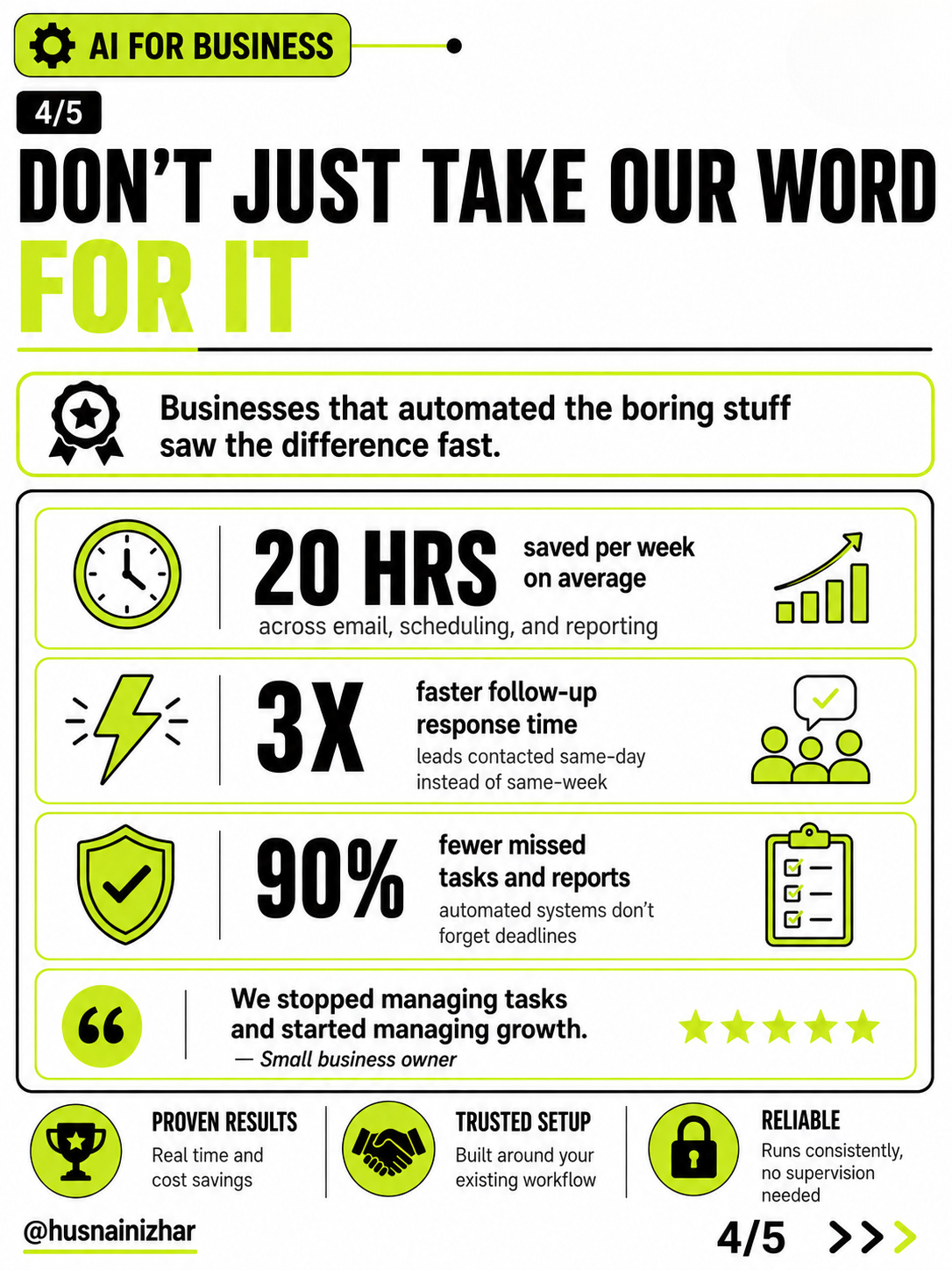
The businesses that make this shift typically see:
- ~20 hours saved per week on average, across email, scheduling, and reporting
- 3x faster follow-up response time — leads contacted same-day instead of same-week
- 90% fewer missed tasks and reports — automated systems don't forget deadlines
This is what I do
I'm a solo software engineer, and this is what I build: custom AI workflows and automation systems for businesses that are done doing the same manual tasks on repeat.
No bloated software, no generic templates — just automation built around how your business actually works.
What's eating up most of your time right now? Reach out and let's figure out if it can be automated.